I eventually compared 38 different GLP-1 providers.
38providers compared
6questions asked of each
5I’d actually consider
1I chose
But the hardest question wasn’t where to buy it. It was:
Semaglutide or Tirzepatide?
After weeks of research, I realized the answer is actually pretty simple once you understand what these drugs are doing.
Two drugs, two very different price tags, one question: which one actually fits your goal?
First, understand the “Food Noise Switch”
This was the part nobody explained to me properly.
Your body has hormone signals that help regulate hunger, fullness and how quickly food leaves your stomach. Think of those signals like a Food Noise Switch™.
When that switch is turned way up, food is constantly on your mind. You finish lunch and you’re already thinking about dinner. You know you’re full, but somehow you’re still looking for something sweet.
Food noise, 10:40 pm. Not hunger. Just the switch stuck on.
The Food Noise Switch™
Switch turned up
Food is constantly on your mind
Lunch isn’t over and you’re thinking about dinner
You’re full, but still looking for something sweet
Switch turned down
You feel fuller sooner
You stay full longer
You think about food less
GLP-1 medications essentially help turn that noise down.
Semaglutide activates the GLP-1 receptor. That can help you feel fuller sooner, stay full longer and think about food less.
Tirzepatide goes one step further. It activates GLP-1 plus GIP receptors. So instead of working through one appetite-related pathway, it’s working through two.
One pathway vs. two
Semaglutide
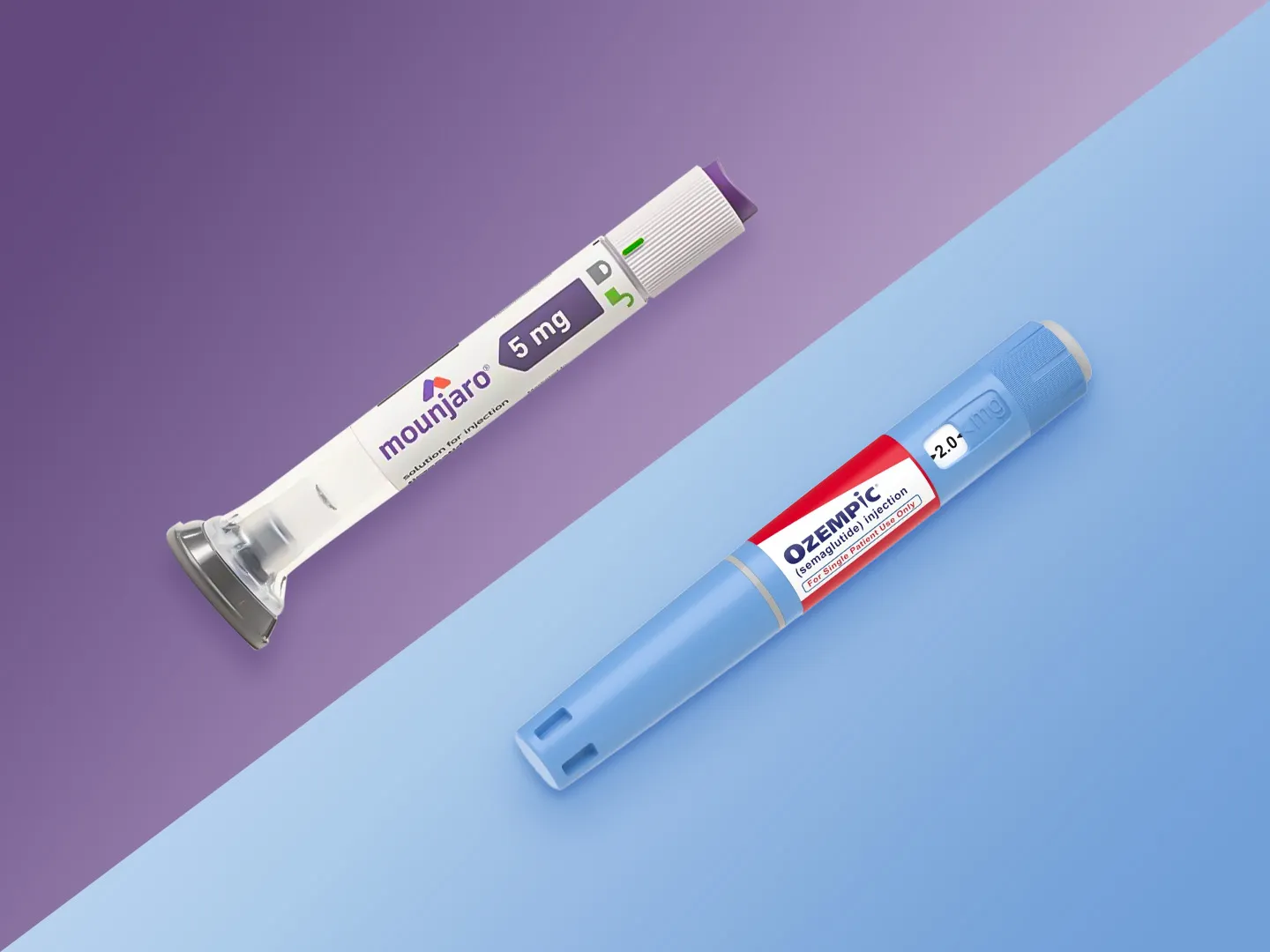
Ozempic, Wegovy, compounded
GLP-1 receptor
1 receptor, 1 appetite pathway
Tirzepatide
Mounjaro, Zepbound, compounded
GLP-1+GIP
2 receptors, 2 appetite pathways
That doesn’t automatically make Tirzepatide the right choice for everyone. But it helps explain why, in head-to-head research, it produced more average weight loss than Semaglutide.
And once I understood that, choosing between them became much easier.
If you have a lot of weight to lose…
I’d lean toward Tirzepatide.
In the SURMOUNT-5 trial, Tirzepatide produced greater average weight loss than Semaglutide over 72 weeks in adults with obesity.
Head to head: average weight change at 72 weeks
Tirzepatide−20.2%
Semaglutide−13.7%
SURMOUNT-5: 751 adults with obesity and without diabetes, branded weekly injections (Zepbound vs. Wegovy) at maximum tolerated doses, 72 weeks. Aronne et al., New England Journal of Medicine, 2025. These are trial averages. Your result will differ.
So if your goal is:
80 pounds. 100 pounds. Maybe more.
That extra potency may genuinely matter.
Most readers are here
But if you’re trying to lose 25, 30 or 40 pounds?
I wouldn’t automatically pay more just because Tirzepatide wins on paper.
If both drugs could realistically get you to your goal, other factors become more important. Especially price and tolerability.
What about side effects?
This was my biggest concern. Losing weight sounds great. Feeling nauseous for three months does not.
Both medications can cause things like:
nausea
constipation
diarrhea
vomiting
Both drugs can cause nausea. How rough it gets depends partly on how you’re dosed.
But something became obvious while I was talking to women who had actually taken them:
The provider matters more than most people realize.
Some clinics basically operate like medication fulfillment companies. Fill out a questionnaire. Get approved. Medication arrives. Good luck.
Others start conservatively, see how your body responds and adjust from there.
Two kinds of “provider”
Medication fulfillment company
Fill out a questionnaire
Get approved
Medication arrives
Good luck
A provider that manages your dose
Same questionnaire, then a doctor who stays in the loop
Starts conservatively
Sees how your body responds and adjusts
Someone answers when you have side effects
That became a huge factor for me.
Is Tirzepatide worth the extra money?
Usually, Tirzepatide costs more. Often around another $100 per month. So I started asking one question:
What am I actually getting for that extra $100?
If you have a large amount of weight to lose, the stronger average results may be worth paying for.
If your goal is more modest? Semaglutide may do exactly what you need for less money.
“Only” $100 more
+$100
per month
=
$1,200
per year
And $100 a month sounds small until you realize that’s $1,200 a year. So my rule became:
Don’t pick Tirzepatide because Reddit says it’s “better.” Pick it because its extra potential actually matters for your goal.
So which one makes more sense?
This is the simplest way I think about it now.
If I had a higher BMI and a lot of weight to lose
I’d lean Tirzepatide.
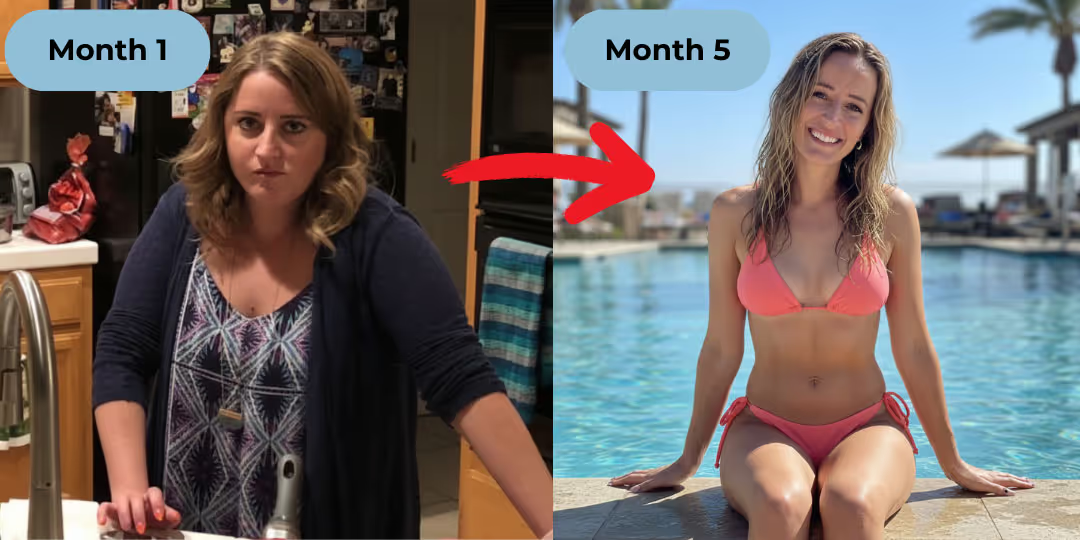
This was me
If I wanted to lose 25 to 50 pounds and cared about price
I’d seriously consider Semaglutide.
If I was especially worried about side effects
I’d spend less time obsessing over the drug and more time choosing the right provider.
They spend hours choosing the medication, then five minutes choosing who prescribes it.
That’s backwards.
The provider can make or break the experience
The medication matters. But so does:
1How you’re started
2How your dose is adjusted
3Whether someone answers when you have side effects
4Which pharmacy fills the prescription
5Whether the advertised price suddenly increases later
6Whether shipping and consultations are actually included
This is also where I learned about 503A pharmacies. Before this, I’d never heard the term.
503A pharmacies can prepare patient-specific compounded prescriptions when ordered by a clinician. That can give the prescriber more flexibility in how a patient is dosed, where clinically appropriate.
Patient-specific prescriptions, prepared when a clinician orders them.
For someone who’s very sensitive to medication, I liked that idea.
Not because “compounded” automatically means better. It doesn’t. But I wanted a provider that treated dosing like something to manage, not something to automate.
Compounded drug products are not approved or evaluated for safety, effectiveness, or quality by the FDA.
And watch out for the “$199 a month” trick
I saw this everywhere.
Semaglutide from $199!
Then you read the fine print. Membership fee. Consultation fee. Shipping. Higher-dose pricing.
Suddenly the $199 medication isn’t $199 anymore.
The fine print
“Semaglutide from $199”$199
Membership fee+ ?
Consultation fee+ ?
Shipping+ ?
Higher-dose pricing+ ?
Your real monthly bill$199 + fees
So when I ranked providers, I stopped looking at the headline price. I looked at:
My six-question provider test
What will this actually cost me each month?
Can I reach a clinician?
Is the price I’m quoted the price I’ll actually pay?
What pharmacy do they use?
What happens if I have side effects?
Can I cancel without a fight?
Who should you actually trust to prescribe it?
Because the difference between providers can be enormous.
Some advertise a low monthly price, then add membership fees, shipping and higher-dose charges. Some give you almost no access to a clinician once the medication arrives. Others include physician support, transparent pricing and more flexible dosing.
So after comparing 38 different GLP-1 providers, I narrowed them down to the five I would actually consider myself.
Only one of them answered all six questions the way I wanted.
How #1 scored on my six questions
It offers both drugs, as a weekly injection or a daily tablet that dissolves under your tongue. And on my six questions:
1
What will this actually cost me each month?
Semaglutide from $299 a month, tirzepatide from $399. The doctor, the follow-ups and the shipping are included.
2
Can I reach a clinician?
Unlimited messaging with your doctor, and a care team you can reach at any hour.
3
Is the price I’m quoted the price I’ll actually pay?
No hidden fees. The price depends on your plan and your dose, and they tell you that upfront.
4
What pharmacy do they use?
State-licensed US compounding pharmacies, overseen by state boards of pharmacy and held to USP standards.
5
What happens if I have side effects?
Your doctor starts low and moves your dose at your pace. Anti-nausea medication is available if you need it.
6
Can I cancel without a fight?
Pause, switch medications or cancel with a message to the care team.
#1 is the one I chose. It’s also the only one on this list with a no-needle option…
Low-BMI women acceptedTablets or injectionsPause or cancel with a message
Willow is the only provider to welcome ‘cosmetic’ weight loss.
If you were denied Ozempic like I was, you know how it feels to be uncomfortable and unconfident in your body, but told you’re ‘not fat enough’ to qualify.
But with Willow, they ask about your goals and actually care about the person behind the BMI.
Whether you need to drop a few dress sizes to feel confident again or you need long-term, sustainable weight loss, chances are you’ll be accepted just like I was.
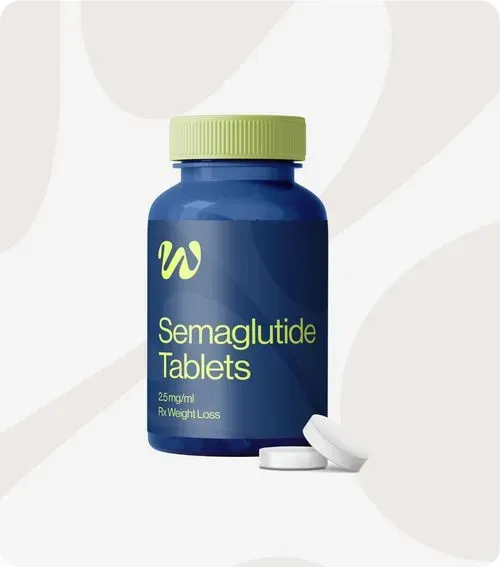
HATE needles? Their Semaglutide tablets are a game-changer.
Most women I know are terrified of needles; lord knows I am too!
But with Willow’s powerful Semaglutide tablets, you don’t have to worry about needle infections, painful daily stabbing routines, or panic attacks.
You just place a tiny, mint-flavored tablet under your tongue each morning, let it dissolve for 8 seconds, and you’re done.
Willow’s Semaglutide tablets: one under the tongue each morning, no needles.
My best friend thought I popped a breath mint on our coffee rounds; she had no clue it was Semaglutide!
That, plus the thousands of positive reviews and real-life transformations from women like me, gave me the confidence to try them for myself, which (aside from having my beautiful kids) was the best decision of my entire life!
My biggest regret is not starting sooner.
Doctors talk about how GLP-1 meds like Willow protect your heart, blood pressure, and kidneys. But the best part?
You catch yourself in the mirror and start smiling.
I had no idea just how much better I would feel in my daily life after dropping 6 dress sizes.
My pants fit right, my husband shows me off to his colleagues, and I can actually leave the house without panicking if I’m wearing enough make-up to look human.
The only downside?
They aren’t the cheapest on the list, but honestly, I’m ok with that considering:
There’s a no-needle option
90% of women are approved the same day
Low BMI women are accepted
What the price includes
Semaglutidefrom $299/mo
Tirzepatidefrom $399/mo
Doctor and follow-upsIncluded
Shipping (2-day)Included
Higher-dose pricingTold upfront
Hidden feesNone
Price depends on your plan and dose, and they say so before you pay.
Also, their doctors scored the best in terms of training & patient approval ratings. So for me, it was a total no-brainer.
If you’ve been on the fence about trying GLP-1s, Willow’s tablets really could change everything for you.
Low-BMI women acceptedTablets or injectionsPause or cancel with a message
#2 - Ro
8.8/10
Injections onlyBMI 27+ typically
Why it’s #2:
Ro Body is a legitimate, well-established telehealth provider with strong brand recognition, and honestly, if I hadn’t found Willow, I’d probably have gone with them!
But for now, their BMI cutoffs and injection-only format keep them in second place.
The positives?
Ro is one of the most recognizable names in online healthcare. They’ve been around since 2017, have processed millions of prescriptions, and maintain excellent safety standards. This is another company you can trust.
Their GLP-1 program offers both branded Wegovy and compounded semaglutide options, giving you flexibility based on your budget.
Like Willow, the medical intake process is thorough. A licensed physician reviews your health history, current medications, and weight loss goals before approval. Video consultations are available if needed.
The downsides:
They maintain relatively strict BMI requirements (typically 27+, with weight-related health conditions). Women seeking purely cosmetic weight loss often report denials.
More critically, Ro only offers injectable semaglutide. No tablets, no sublingual options - just weekly injections. For the 40%+ of women who are needle-phobic, this could be a drawback.
Overall, their excellent reputation and medical oversight make Ro a great option. But BMI restrictions and the injection-only format limit accessibility for women like us.
FuturHealth is a newer player in the GLP-1 space, but they’ve quickly gained attention for their personalized treatment plans and competitive pricing.
The positives?
Customized Dosing: FuturHealth emphasizes personalized medication plans based on your specific goals, side effect tolerance, and response to treatment.
Lower Cost Than Some Competitors: As a new player in the space, they’re offering some pretty good discounts, especially on your first month as a kind of ‘intro’ offer - so for super budget-conscious women (who qualify), they can make a great choice.
The downsides:
Their approval process can be inconsistent.
Some women report getting approved within a few days, while others wait up to a week. And while they sometimes accept lower BMI patients, their criteria aren’t as clearly defined as Willow’s, which can make eligibility feel like a guessing game.
Hers takes fourth place because they’re affordable and easy to sign up for, but their approval process heavily favors women with higher BMIs.
The positives?
The platform is clean and user-friendly.
You fill out a 10-minute health questionnaire, upload a photo, and a licensed physician reviews your case within 24-48 hours. If approved, your medication ships discreetly to your door.
Hers also offers some of the most competitive pricing,
The downsides:
If your BMI is under 27, your chances of approval drop significantly.
Which is still more lenient than big brands like Wegovy, but compared to others on this list, like Willow or Ro.
Multiple users in online forums report denials with the message "not medically necessary at your current weight."
Additionally, Hers only offers injectable semaglutide. For women with needle phobia, this is a deal-breaker.
Overall, like FuturHealth, Her’s is a great budget option if you have a higher BMI and don’t mind injections, but not ideal for ‘cosmetic’ weight loss seekers.
Injections onlyStrictest BMI on the listCan exceed $400/mo
Why it’s #5:
Noom Med earns fifth place because while they offer competitive GLP-1 prescriptions, their primary focus remains on their coaching app and behavioral psychology approach.
The positives?
The platform provides excellent tracking tools and daily lessons about habit formation, which some women appreciate. However, their GLP-1 access feels like an afterthought rather than their core offering.
The downsides:
Whilst still more accessible than big pharma brands, Noom still lands at 5 on my list for a reason.
Their pricing structure is confusing. You pay for the coaching app separately from the medication, and the total monthly cost can quickly exceed $400 when combined.
Their BMI requirements are also stricter than any of the other providers on this list.
They do offer compounded semaglutide (the same active ingredient as Ozempic) through partner pharmacies, but again, only in injectable form (no needle-free options available).
Overall, Noom is Good for women who want intensive lifestyle coaching alongside medication, but the main drawbacks are that they’re the most expensive on the list and are injection-only.








.avif)
.avif)

.avif)